Student Planner Cover: A Merch Design Review
As an embroidery designer who specializes in commercial branding and small business merchandise, I approach every new digital asset with a critical eye. When evaluating the Student Planner Cover machine embroidery design, my focus shifts immediately from personal crafting to professional application. While the product description highlights this as a cute addition to complete your embroidery collection for Back To School projects, a seasoned digitizer sees potential beyond the classroom. For small business owners, Etsy sellers, and apparel decorators, this design offers a unique opportunity to create branded assets that feel academic, organized, and intentionally handmade.
Visual Personality and First Impressions
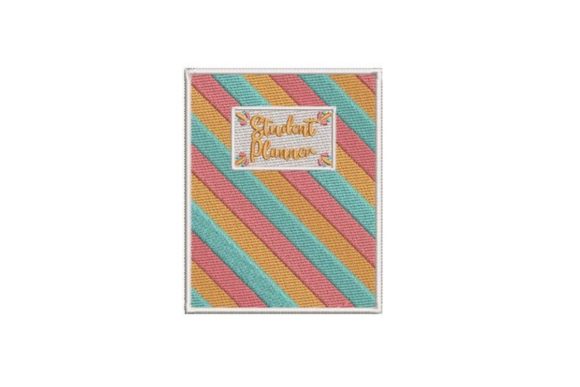
The first impression of the Student Planner Cover design is distinctly structured yet approachable. In the context of commercial embroidery, "cute" often translates to "accessible" and "friendly," which are vital traits for customer-facing businesses. The aesthetic suggests organization and creativity, making it visually compatible with brands that value structure, education, or artistic expression. Unlike overly complex illustrations that can become muddy when stitched, this design likely relies on clean lines and defined shapes typical of planner aesthetics.
For a creative studio, boutique, or tutoring service, this visual language communicates professionalism without being sterile. It strikes a balance between playful and polished. When reviewing the design assets, I look for clarity in the digitizing path. A planner-inspired motif usually involves rectangular frames, text elements, and iconography. If these elements are digitized with appropriate underlay and pull compensation, the finished product will maintain its geometric integrity even on stretchy fabrics or textured materials. This inherent structure makes it an excellent candidate for brand identity work where consistency is key.
Commercial Applications for Small Business Merch
The versatility of the Student Planner Cover embroidery file extends far beyond paper goods. In a real-world business scenario, imagine a local café or bakery that hosts workshops or sells educational kits. This design could serve as a signature mark on canvas tote bags, reinforcing the shop’s commitment to learning and community. For a florist offering arrangement classes, stitching this design onto denim aprons creates a cohesive uniform that feels both functional and branded.
I frequently recommend designs like this for cap embroidery and chest logos because they scale well within standard hoop sizes. The rectangular or square proportions common in planner covers fit naturally on the front panel of a baseball cap or the left chest of a polo shirt. For Etsy sellers focusing on digital products or stationery, using this design on fabric packaging or as a tag on a handmade product adds tangible value. It transforms a simple item into a premium experience. Furthermore, for pet brands or florists, this design can be adapted as a "training log" or "care guide" patch, leveraging the planner association to suggest expertise and record-keeping.
Strategic Placement and Brand Recognition
When integrating this design into custom apparel or merchandise, placement dictates perception. On an apron, positioning the Student Planner Cover at waist level creates a functional badge effect, whereas placing it near the collarbone aligns it with traditional corporate branding. For tote bag design, centering the motif ensures visibility when the bag is carried. Consistency in placement across different items—staff uniforms, event merch, and retail products—builds visual recognition. Customers begin to associate that specific embroidered shape with your business's reliability and attention to detail.
Technical Considerations for Production
Despite its charming appearance, the Student Planner Cover requires careful technical evaluation before mass production. As with any machine embroidery design intended for commercial use, you must verify the stitch density and minimum text size. Planner designs often feature small lettering or thin border lines. If the original digitizing was optimized for flat cotton quilting rather than commercial apparel, those details may disappear on pique knits or fleece.
Fabric Texture and Stabilizer: Always test on the actual substrate. If you are producing staff uniforms made of performance polyester, the fabric texture can distort fine details. You may need to increase stabilizer weight or add a water-soluble topping to ensure the stitches sit on top of the fabric rather than sinking in. For cap embroidery, confirm that the design fits within the curved sewing field of your cap frame; flat planner dimensions do not always translate directly to curved surfaces without distortion.
Washability and Durability: Merchandise for cafes, bakeries, and pet brands faces frequent laundering. Inspect the design for long satin stitches that might snag. If the Student Planner Cover uses large fill areas, ensure there is adequate tack-down stitching to prevent puckering after washing. For items like aprons or work shirts, durability is just as important as aesthetics. A design that unravels after three washes damages brand trust faster than no branding at all.
Designer Notes for Successful Implementation
Before loading this digital embroidery file into your machine for a client order or inventory run, follow this professional checklist to ensure quality results:
- Verify Licensing: Confirm the commercial licensing terms included with the file. Just because a design is sold for Back To School use does not automatically grant rights for selling finished merchandise or branded uniforms.
- Create a Printable Mockup: Before stitching, overlay the design file onto a photo of your intended product. This helps visualize scale and contrast against your brand colors.
- Test Thread Colors: Planner designs often rely on high contrast. Test thread color combinations on scrap fabric first. What looks good on screen may lack definition when stitched in similar-toned threads.
- Check Hoop Size Compatibility: Ensure the design dimensions fit comfortably within your smallest intended hoop with adequate margin for framing. Never force a design to the absolute edge of the hoop capability.
- Evaluate Small Patch Viability: If intending to use this as an embroidered patch, verify that all internal details remain legible at 2 inches or smaller. You may need to simplify the design specifically for patch production.
- Compare Beside Other Assets: Place this design next to your existing logo or brand icons. Does the stitch style match? Visual consistency across all design assets reinforces a professional image.
Impact on Customer Trust and Product Value
In the competitive landscape of handmade products and small business merch, the quality of your embroidery signals the quality of your business. Using a well-executed design like the Student Planner Cover demonstrates intentionality. It tells the customer that you care about the details, from the organization of your services to the finish of your merchandise. When a customer receives a tote bag or wears a cap featuring crisp, clean embroidery, their trust in your brand increases.
This design bridges the gap between utility and decoration. It evokes feelings of preparedness and creativity, emotions that transfer directly to your brand identity. Whether used for a bakery’s recipe class apron or a tutor’s welcome kit, the Student Planner Cover serves as more than just a pretty picture; it acts as a visual anchor for your business narrative. By treating this digital embroidery file with professional rigor—testing, adjusting, and validating—you transform a simple Back To School motif into a powerful tool for commercial success and customer engagement.